

“The Blue Zones”
As we look to wellness on planet Earth, we are seeing areas known as Blue Zones emerge. A remote island of Japan … Sardinia in the Old World … an enclave in California … it’s common to find centenarians (100 year olds) and even supercentenarians (110 years old or more) flourishing.
Calling them Blue Zones, that’s nomenclature coming from work done by Michel Poulain, a Belgian demographer, and Gianni Pes, an Italian doctor, in the early 2000s.
And it’s back in the lexicon thanks to a new documentary on Netflix.
The original duo identified a population in Sardinia’s Nuoro province that had the most male centenarians in the West. The investigators used a blue pen to draw concentric circles around the village clusters on a map.
Not long after drawing the blue zones, Dan Buettner, explorer and National Geographic Fellow, along with a team of epidemiologists, doctors, nutritionists, anthropologists, and demographers, set out to find other “longevity hot spots.”
It was Buettner’s National Geographic cover story, “The Secrets of Living Longer,” where the stunning information appeared in 2005. He has since penned The Blue Zones: Lessons for Living Longer From the People Who’ve Lived the Longest and related books, and in fact, Blue Zones is now a trademark.
Is it simply how these populations live or is it their genetic makeup that accounts for their longer-than-average life expectancies? Perhaps it’s a combination of the two.
Perhaps what we find most appealing to the Blue Zone information is the fact that researchers have identified five areas of the world that have a very high proportion of people who live very long lives, relatively free of disability. The Ogliastra and Barbagia regions of Sardinia; the Greek island of Ikaria; the Nicoya Peninsula in Costa Rica; Okinawa, Japan; and Loma Linda, California.
For example, in Sardinia, there is a village (900 people) in the Italian island’s interior which had 20 centenarians over the past 20 years. And in that village, men and women live equally long lives.
In Okinawa, located on an archipelago off the southwest coast of Japan, about 50 of every 100,000 inhabitants are centenarians. The average, for comparison, is about 15 in 100,000 people worldwide.
In the Greek Isles, Ikaria was found to have 13 percent of 1,420 residents over the age of 80 in 2009, compared with fewer than five percent in Greece otherwise.
In Latin America, on the Nicoya Peninsula of the Pacific coast of Costa Rica, men in their 60s were found to have four times better chance at making it to 90 than their American counterparts.
And speaking of Americans, Loma Linda, California, is the only Blue Zone in the United States, where people live a decade longer than the average American. Research found that Loma Linda, located in the San Bernardino Valley in Southern California, has a high concentration of Seventh-Day Adventists, a religion where parishioners are known for their healthy habits.
Research over the past 20 years has found that people living in Blue Zones have interesting traits in common.
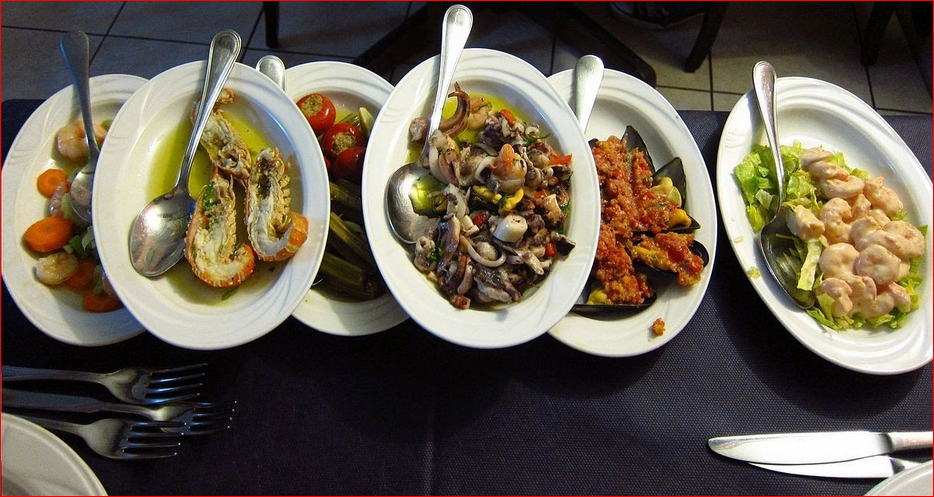
Blue Zone inhabitants eat mainly plant-based diets, rich in leafy green vegetables, fruits, whole grains, and beans. They avoid added sugar and processed foods, and they rarely overeat. They drink alcohol in moderate amounts, if at all. They’re naturally active, garden or farm, and walk several miles a day.
And researchers have found that this certain style of wellness goes beyond diet and exercise. Individually and collectively, the Blue Zones form a sense of community. They purposefully maintain low stress levels, emphasize family and friends, and regularly participate in religious or spiritual activities.
The Okinawa Centenarian Study and the New England Centenarian Study looked at the Blue Zones data. Conclusions have found that long, healthy lives come more from a blend of lifestyle, environmental, and genetic factors. The biggest factor being lifestyle (diet and exercise) for those reaching age 90, and genetics taking a larger role in those reaching centenarian status. Longevity genes if you will.
And as researchers continue to pour over Blue Zones data, many keep a keen eye on those diets from those hotspots around the world associated with good health and decreased mortality rates.
Similar to several Blue Zones, the “Mediterranean diet” sees a generous amount of olive oil, fish, and wine. The “Ornish Spectrum,” a diet developed a few decades ago as a treatment for heart disease, looked further past food and toward social support, stress management and exercise as a hallmark of longevity.
The Blue Zones could be more of a “blueprint” as we head into the 2020s still looking for the key to unlocking longer lives and better quality of life.




 Sips & Sites & Bites
Leave a comment